
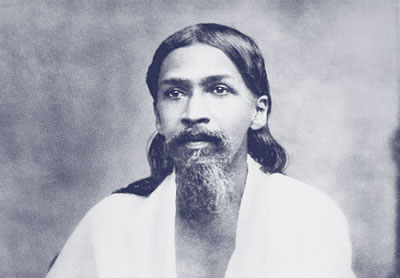
Transformation of the Gunas – Sri Aurobindo
Sri Aurobindo
Comment by Atman Nithananda
As far as I know, Sri Aurobindo is the only spiritual master in India who speaks of converting the Gunas into their higher counterparts and not of eliminating them from the mind, especially the lower ones, i.e., the rajas and tamas, since sattva remains as it is innate in the mind.
What Aurobindo states does not coincide with my experience and the teachings of other great spiritual teachers, however, I remain open to this approach and when I later find myself in a higher state of consciousness I will have the opportunity to review whether or not there is indeed a transformation of rajas and tamas in the mind.
Finally, in my experience, whether elimination of the rajas and tamas or transforamtion of the three gunas, it has no practical effect on our practice, growth and realization of our true Self.
Follows the text of Sri Aurobindo
The three gunas become purified and refined and changed into their divine equivalents: sattva becomes jyotih, the authentic spiritual light; rajas becomes tapas, the tranquilly intense divine force; tamas becomes sama, the divine quiet, rest, peace.
You cannot drive out rajas and tamas, you can only convert them and give the predominance to sattva. Tamas and rajas disappear only when the higher consciousness not only comes down but controls everything down to the cells of the body. They then change into the divine rest and peace and the divine energy or Tapas; finally sattwa also changes into the divine Light. As for remaining quiet when tamas is there, there can also be a tamasic quiet.
The Prakriti can be psychicised and spiritualised and the gunas yet remain, but with the sattwa dominant and the rajas and tamas enlightened by the sattwa. As the transformation increases, the gunas change more and more towards their divine equivalents, but it is only when the supramental comes that there is the full change.
The transformation of the gunas is necessary for the perfection of the nature, not for liberation. Liberation comes by loss of ego and desire.
🌷 Sri Aurobindo (Letters on Yoga -1, page-47-48)
Transformation of Tamas into Sama
The tamas is part of the general physical Nature and so long as that is not fully changed and illumined, something of it remains; but one has only to go on opening oneself to the Mother’s consciousness and in time the tamas too will change into the inner divine rest and peace.
All undesirable things are a mistranslation in the Ignorance of something that on a higher plane is or might be desirable. Inertia, tamas, is the mistranslation of the divine s ́ama, rest, quietude, peace; pain is a mistranslation of Ananda, lust of love etc. It is only when the lower perversions are got rid of that the higher things in their truth can reign.
It is the tendency of the physical to substitute its own inertia for the emptiness. The true emptiness is the beginning of what I call in the Arya sama — the rest, calm, peace of the eternal Self — which has finally to replace tamas, the physical inertia. Tamas is the degradation of sama, as rajas is the degradation of Tapas, the Divine Force. The physical consciousness is always trying to substitute its own inertia for the calm, peace or rest of the true consciousness, just as the vital is always trying to substitute its rajas for the true action of the Force.
It [sleepiness] is the physical tamas trying to push itself into the place of the calm. Part of the transformation consists in replacing the element of tamas in the nature by the s ́ama or true calm, peace, rest, of which tamas or inertia is the degradation or perversion in the lower nature (for each of the three gunas has its divine counterpart in the higher nature). But tamas being the settled habit of the inferior nature tries to persist and keep or get back its place. That is the reason why this kind of alternation takes place between the two.
Inert sama is sama still mixed with tamas — a quietude that has no force of action (tapas) in it, no positive principle of happy ease, no positive light of knowledge — but is still calm, repose, release from all disturbance.
Sri Aurobindo
 atmannityanada