
Desire and Anger
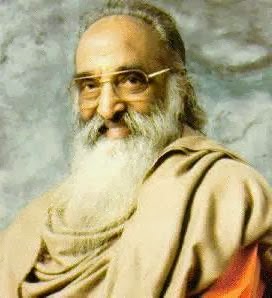
Extracts of Bhagavad Gita translated by Chinmayananda /blog
Arjuna said:
36. But, by what impelled does man commit sin, though against his wishes, O Varshneya, constrained, as it were, by force?
The Blessed Lord Said:
37. It is desire, it is anger born of the “active, ” all-devouring, all-sinful; know this as the foe here (in this world) .
COMMENT by Chinmayananda
IT IS DESIRE, IT IS WRATH –— Desire is the inner ‘Satan’in the individual’s bosom. We have seen earlier that desireis nothing other than our own spiritual “ignorance,”expressing itself in our intellectual personality. Thisstatement in the stanza is not to be understood asenumerating two different things. “Desire” itself, undercertain circumstances, gains expression as “anger.” Aconstant agitation of the mind, expressing as anuncontrollable impatience to gain something, is called”desire.” Desire is generally for something other thanourselves. In the clash of existence, beings andcircumstances may come between ourselves and the”object of our desire,” and in such cases, our “desire” —impulses, striking at the obstacle, gain the ugly look of”wrath.”
Thus, whenever emotions for acquisition and possession of an object flow incessantly towards that object, the bundle of thoughts so flowing is called “desire;” while the same emotions, when they get obstructed from reaching their desired objects, and get refracted at an intermediate obstacle, are called “anger.”
This “desire-anger-emotion” is the very ‘Satan’in us that compels us to compromise with our own intellectually known Higher values of existence, and tempts us to perpetrate sins. Greater the desire, greater the power in the pull towards the sinful and the low. Once desire has come to manifest itself in our intellect, it enshrouds the wisdom in us.Desire and anger, and their numberless children of sin and sorrow, must ever come to breed upon the marshy lands of our deluded intellect. To come under their sway is “ignorance.” To come to rule over them is “Wisdom.”
The Blessed Lord Said:
38. As fire is enveloped by smoke, as a mirror by dust, as an embryo by the womb, so this (wisdom) is enveloped by that (desire or anger).
39. Enveloped, O Son of Kunti, is ‘wisdom’ by this constant enemy of the wise in the form of ‘desire, ‘ which is difficult to be appeased, like fire.
COMMENT by Chinmayananda :
The discrimination in man is screened off and obstructed in its exercise due to the attachment in his mind for the ever-changing worldly-objects. We all know that our attachments to things can fall under three distinct categories. Our desires can either be low and vicious —mind for the flesh-fleshy carnal pleasures — or our ambitions may be for an active exertion in order to achieve power and wealth, to gain strength and might, to win fame and glory. There can also be a burning aspiration to strive and to achieve a diviner perfection and a Godly Self-illumination. Thus, our desires can fall under three headings according to the quality of the attachment —inert (Tamasic), or active (Rajasic), or noble and divine (Sattwic). The veilings that are created over our discrimination by these different types of qualities (gunas)are indicated here by the three different examples.
AS FIRE BY SMOKE –— A smoky fire-place, shrouded by dark curling smoke can sometimes, if not totally, at least partially, veil the brilliance of the light emitted by the flames. A wick without a chimney is less bright than with a chimney, proving the example under review. Even Sattwic desires veil the infinite glory of the Spirit.
AS DUST ON A MIRROR –— This illustrates the veiling caused by agitations that cover the purer intellect due to our thick desires for glory and power (Rajasic). Compared with the former, this is indeed more complete, and the removal of it is, naturally, more difficult. The smoke rolls off even at a passing whiff of breeze, while the mirror cannot be cleaned even by a storm. It can be polished only by our own efforts at dusting it clean with the help of a clean, dry duster. Through the smoke, however thick it might be, the fire can be perceived; through the dust, if it be thick, no reflection at all can be seen in the mirror — if at all seen it will only be dim.
AS THE FOETUS IN THE WOMB — This is an illustration to show how completely the Diviner aspect in us is screened off by the low animal appetites and the vulgar desires for the sensuous. The foetus is covered by the womb until it matures, and there is no method of observing it as long as it is in the womb. The veiling is complete, and it can drop off only after a definite period of time. Similarly, the desires for the flesh-fleshy enjoyments build, as it were, a womb around the discriminative power in us, and such low mental preoccupations(Tamasic) can drop off only after a longer period of evolutionary growth undergone by such a deluded mind and-intellect.In the true scriptural style, Krishna thus distinguishes between the different textures in the veils that come to cover the soul when the individual is entertaining different types of desires. In short, desire is that which hides the Divine in us.
The Blessed Lord Said:
40. The senses, the mind, and the intellect are said to be its seat; through these, it deludes the embodied by veiling his wisdom.
COMMENT by Chinmayananda :The sense-organs, functioning without restraint in the world of sense-objects, are a very convenient theatre for”desire” to function in. When the external stimuli reach the mind through the sense-organs, the mind also becomes a breeding centre of sorrows created by “desire.” Lastly, the intellect, working and playing with the memories of the sense-enjoyments it had lived, and of the mental attachments it had entertained, becomes yet another safeden for “desire” to function from.
The deluded ego, foolishly identifying with the body, desires sense enjoyments.
Thoughtlessly identifying with the mind, it thirsts to experience more and more emotional satisfactions. And lastly, identifying with the intellect, it plans to re-live the remembered experiences of sense-enjoyments and mental-joys.
As the desires in us, so are our thoughts; thoughts are the disturbances created in our mental zone by our desires.At every moment, the texture and quality of our thoughts are directly conditioned and controlled by our desires.Thoughts in an individual, expressed in the outer world of objects, become his actions; actions are nothing other than the actor’s thoughts projected and expressed in the world.
Thus, in this chain-of-‘ignorance,’ constituted of desires, thoughts, and actions, each one of us is caught and bound.
THE BLESSING OF MAN is his divine faculty of discrimination.
When this instrument is destroyed, man comes to behave in no better way than a biped animal;
The blessing, because of which man is considered superior
to animals, is his divine faculty of discrimination. An
intellect, strengthened by its own intrinsic capacity to
distinguish between the Real and the unreal, the right andthe wrong, is the mighty instrument of self-developmentin man. When this instrument is destroyed, man comes tobehave in no better way than a biped animal; panting onthe path of existence, bullied by its own lower instincts ofmiserable passions and low appetites. Naturally, he failsto make any true gain out of his life’s chances, and finallydestroys himself. Peace love harmony
The ‘secret’ to a plentiful life, a life of harmony, happiness and contentment is to have a sattvic mind free from desires and ego and to live in every moment in conscious contact with our true Self (Consciousness).
🌺 Peace, Love, Harmony
 atmannityanada