The Human Being – In a Nutshell
The Human Being – In a Nutshell
by Atman Nityananda
Here is presented a brief description of the main components and functions of a human being, which can be helpful to have a deeper understanding about your nature.
The two fundamental aspects of our human nature
- 1. The true Self – Consciousness (Self, Divine Self, Soul, Essence, Atman).
- 2. The apparent Self – Body-mind-ego (Physical body, vital energy, mind, intellect, subconscious, causal body)

THE TRUE SELF – Atman, Consciousness
Being or Existence – Consciousness or awareness – Bliss (Satchitananda)
Our true Self, what we really are, is Pure Consciousness and it is identical with the Absolute or Universal Consciousness* which is the highest principle of the universe (what we call God, Brahman, etc.). Universal or Absolute Consciousness (Brahman, God) manifests in us as the seemingly individual Consciousness (Atman, Self) which we mistakenly identify with our body and mind. That is, we feel and believe that the body is our self, that Consciousness belongs to us (to the body-mind me entity) and that it is personal and different from the universal Consciousness and the Consciousness of other beings.
[*] Absolute or Universal Consciousness: Universal Consciousness is the Supreme Principle, the source and cause of the universe (visible and invisible). It is the origin of all that is manifested in the present, those that have manifested in the past and those that are to be manifested in the future. Spiritual traditions and religions have given various names to this Supreme Principle of life, such as Brahman, Purusha, Paramatman, God, Spirit, Allah, Jehovah, Tao, etc.Each tradition perceives and approaches this Supreme Principle along with its relationship with man in a different way. Some approaches are close to each other, while others have quite large differences.
Our true Self (Consciousness) is experienced in us as the timeless, formless, immovable, unchanging, ever-present, silent presence, and as peace, plenitude, freedom and bliss.
The nature of the supreme Self
Discrimination between the Self and the non-self by S. Sivananda
The discrimination between the Self and the non-Self – Vicekachudamani
Realizing the Conscious Silent Presence
Read also
The Moksha Gita by Swami Sivananda – Commentary by Swami Krishnananda
- The Human Being – In a Nutshell
- The two fundamental aspects of our human nature
- THE TRUE SELF – Atman, Consciousness
- 1. PHYSICAL BODY & The three Bioenergies -Doshas (Vata-Pitta-Kapha)
- 2. VITAL BODY The Vital-emotional Sheath and the Vital-emotional Ego
- Psychic vital energy
- 3. The Inner Organ known as Mind
- Ego – Ahamkara The illusory Self identity
- Outer mind (Manas)
- Intermediate mind or Intellect (Buddhi)
- Inner mind – Subconscious mind (Chitta)
- The three qualities or Gunas of mind (Sattva, Rajas, Tamas)
- The Four States of Consciousness
- 4. Causal body (Anandamaya Sheath)
1. PHYSICAL BODY &
The three Bioenergies -Doshas (Vata-Pitta-Kapha)
The three Bioenergies -Doshas (Vata-Pitta-Kapha)
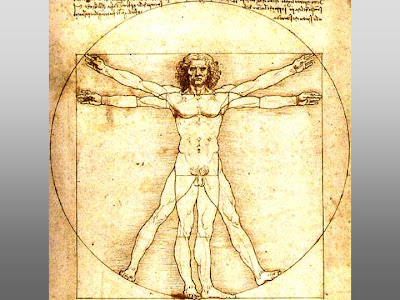
The human body is a remarkable creation, intricately composed of both physical and energetic elements. It is said to be constituted of the five gross elements: space, fire, air, water, and earth. These elements form the foundation of the human structure, each playing a crucial role in maintaining the body’s equilibrium.
The physical body is constituted of the five gross elements (Space, Fire, Air, Water, Earth)
Within this magnificent framework, the body operates through a network of systems, including the hormonal, cardiovascular, and nervous systems. These systems work together seamlessly to regulate bodily functions, ensuring that we can perform the most intricate tasks and functions.
The physical body is also under the influence of vital energy and the three bioenergies: Vata, Kapha, and Pitta. These bioenergies are central to Ayurvedic medicine, an ancient system of holistic healing. Vata represents the air and space elements, Kapha embodies water and earth, and Pitta embodies fire and water. The balance of these bioenergies is vital for maintaining physical and mental well-being.
The three Bioenergies -Doshas (Vata-Pitta-Kapha)
In essence, the human body is a harmonious symphony of elements and energies, a testament to the beauty of nature’s design. Understanding and nurturing this intricate balance is key to achieving optimal health and vitality, allowing us to live our lives to the fullest.
2. VITAL BODY
The Vital-emotional Sheath and the Vital-emotional Ego
The Vital-emotional Sheath and the Vital-emotional Ego
1. Physical vital energy
2. Physical vital energy
Physical Vital energy
5 Pranas – (apana, vyana, udana, samana, vyana)
5 Subpranas (Naga, Kurma, Krikara, Devadatta, Dhananjaya). The physical vital enable all functions of the body.
Energy Channels – Nadis
The prana flows through the 72.000 nadis (etheric channels). Important channels are the twelve acupuncture meridians with many acupuncture points.
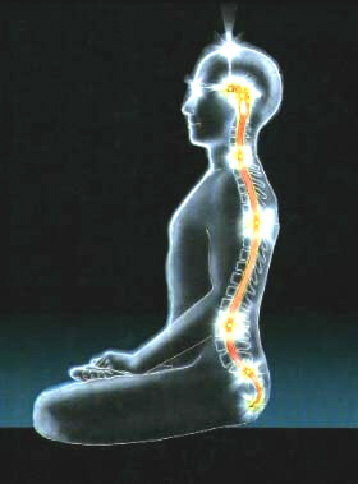
Most important are the nadis ida, pigala and brahmanadi (susumna) in which the sexual energy and the shakti-kundalini arise. There are also many energy centers (chakras), the 7 main centers are located along the spinal column.
Shakti Kundalini (the sacred serpent power)
A latent psychic energy force located in the lower spine (sacrum) that is directly connected to sexual energy.
This force must be fully awakened in order for man to achieve the full development of the higher faculties of mind and higher states of consciousness and to achieve full conscious union with Cosmic Consciousness. (Theosis, Enlightenment, Self-realization, Liberation).
When awakened it must gradually ascend through the spine and reach the higher centre or Chakra connected to and above the brain. As it ascends from the spine it awakens the energy centers located along the spine. 7 are the main centres or Chakras, and each of them is associated with specific psychic powers and states of consciousness.
Psychic vital energy
The Vital-emotional Sheath and the Vital-emotional Ego
Mental vital – emotional vital – central vital – lower vital (according to Sri Aurobindo). The psychic prana enables the function of all psychic functions like thinking and feeling.
The vital sheath in its impure state creates all negative formations in every human being such as likes dislikes, desires, repulsion, attraction, lower emotions of fear, anger, greed, etc. The vital formations are expressed in the mind level as compulsive thoughts and at the heart level as the negative emotions viz. fear, anger, greed, depression, fear etc. (as heart here I’m referring to the outer heart which is not really a center. The inner heart is the real one and its connected with the soul or psyching being as Sri Aurobindo call it.).
Higher emotions of love, peace joy, devotion, compassion belong to inner heart. Some spiritual teachers refer to the inner heart as the higher emotional center.
3. The Inner Organ known as Mind
In fact, it is the psychological aspect of human existence and the instrument with a great variety of functions through which we experience and understand ourselves and life. It is constituted by various layers or levels that function as a whole. However, each layer or level has its own distinct functions and qualities.
In the realm of the mind, four distinct components play pivotal roles in shaping human consciousness and behavior.
Aspects of the Mind
- Intellect (Buddhi)
- Mind (manas)
- Subaconscious mind (Chitta)
- Ahamkara (ego)
The three qualities or Gunas of mind
(Sattva, Rajas, Tamas)
Together, these components form a complex web that governs human consciousness and behavior, constantly interacting and influencing each other. The ego shapes our sense of self, the intellect rationalizes, the mind experiences, and the subconscious stores and influences. Understanding the interplay of these elements is crucial in comprehending human behavior and navigating the complexities of the mind.
Ego – Ahamkara
The illusory Self identity
– The gross ‘Ego’ the rajasic and tamasic ego (the desire soul): the sense “the body is me”
– The higher ‘Ego’ : A very subtle sense of individuality to enable a sage to function in this physical plane.
Ahamkara, or ego, represents the sense of individual identity and self-importance. It’s the element that shapes our self-perception and influences how we relate to the world. This aspect of the mind colors our experiences, steering our reactions and decisions.
Outer mind (Manas)
Outer mind (Manas): The external mind, or manas, along with psychic prana is the seat of emotions and also of thoughts, and sensory perceptions. It interprets the information received from the external world and processes it (along with the inner min, chitta), influencing our feelings, desires, and responses.
Aspects of external mind: Sensory, emotional, physical, mechanical, sensual, imaginative, active (formative will). As physical mind along with inner mind coordinates all conscious body movements except those which belong to the instinctive mind.
Intermediate mind or Intellect (Buddhi)
Intellect (Buddhi) refers to the faculty that reasons and makes judgments.
The intellect is the faculty that knows, cognizes, thinks, analyses, reflects, considers the pros and cons (for and against; to do or not to do; to do this or to do that) ratiocinates, compares, contrasts, deduces, infers, decides, makes judgments, determines, concludes, judges.
It serves as the discriminating factor in decision-making, helping differentiate between right and wrong and guiding actions based on this understanding.
a. Lower intellect
When functions with the data of the external world and under the dominion of the rajas and tamas qualities and lower ego it is the lower aspect of intellect.
The intellect polluted by rajas, tamas and the egoic energies and qualities loses its clarity and sharpness; becomes dull, inattentive, distracted and loses its capacity to express its innate capacities and functions properly. Thus instead of being a servant of consciousness becomes a slave of the ego and is called the lower intellect.
b. Higher intellect – Intelligence
Its main functions is Self-awareness, self-observation, detachment, right understanding, intuitive knowledge, discrimination between real and unreal, perception of truth, intuition.
When sattva prevails in intellect and is functioning in conscious union with our divine essence the intellect assumes its higher aspect and is called intelligence.
Inner mind – Subconscious mind (Chitta)
Subconscious Mind (Chitta): Chitta is the reservoir of memories, experiences, and impressions. It holds the imprints of past actions, emotions, and thoughts, influencing our present behavior and shaping our inclinations and habits.
The inner mind is the general field of mind, it is the conditioned consciousness by the mental emotional structures. It is related to memory, latent tendencies, impressions (samskaras and vasanas) and creativity.
Regulates the pranas and instinctive bodily and psychological functions.
The three qualities or Gunas of mind
(Sattva, Rajas, Tamas)
All material nature is made up of the three gunas (qualities) that are a great map for navigating through life. When you are able to recognize which of these energies is at play in your life, you find it much easier to reach a state of balance. Part of the work of yoga is to go beyond the limitation of seeing life as forms and concepts, and to see the underlying qualities of things.
Each quality has its own characteristics. Since both the external world and the internal world of the mind are made of matter, the qualities of the three gunas are seen in both.
For example, in the external world we see:
- Sattva — equilibrium and serenity
- Rajas — dynamism and movement
- Tamas — inertia and stagnancy
In the internal world of the mind, these are experienced as:
- Sattva — Purity, compassion, wisdom, knowledge, understanding, comprehension, recognition, generosity, patience, kindness
- Rajas — Desire, anger, attachment, greed, possessiveness, envy, jealousy , hyperactivity, agitation, fear, nervousness, anxiety, aggressiveness, competitiveness, power, prestige, name and fame
- Tamas — Impurity, dullness, , delusion, confusion, depression, stupor, unconsciousness, coma
Read more about The Three Gunas
The Four States of Consciousness
Waking state – Dream sleep state – Deep sleep state – Superconscious state.
4. Causal body (Anandamaya Sheath)
The veil of ignorance. In causal body reside all possibilties and the seeds of samskaras and vasanas, 3 modes of happiness (priya- moda- pramoda). It is called the bliss sheath beccause whenn pure reflects on it the bliss of our true Self, Consciousness.
The Bliss sheath or (Anandamaya Kosha)
Here is presented a brief description of the main components and functions of a human being, which can be helpful to have a deeper understanding about your nature.
🌺 Peace, Love, Harmony
 atmannityanada